
|
June 2026,Volume 48, No.2
|
Internet
|
Glucagon-like peptide-1 (GLP-1) and dual GLP-1/glucose-dependent insulinotropic polypeptide (GIP) receptor agonists in Family Medicine: a comprehensive review of current evidence and clinical applicationSio-pan Chan 陳少斌, Alfred KY Tang 鄧權恩
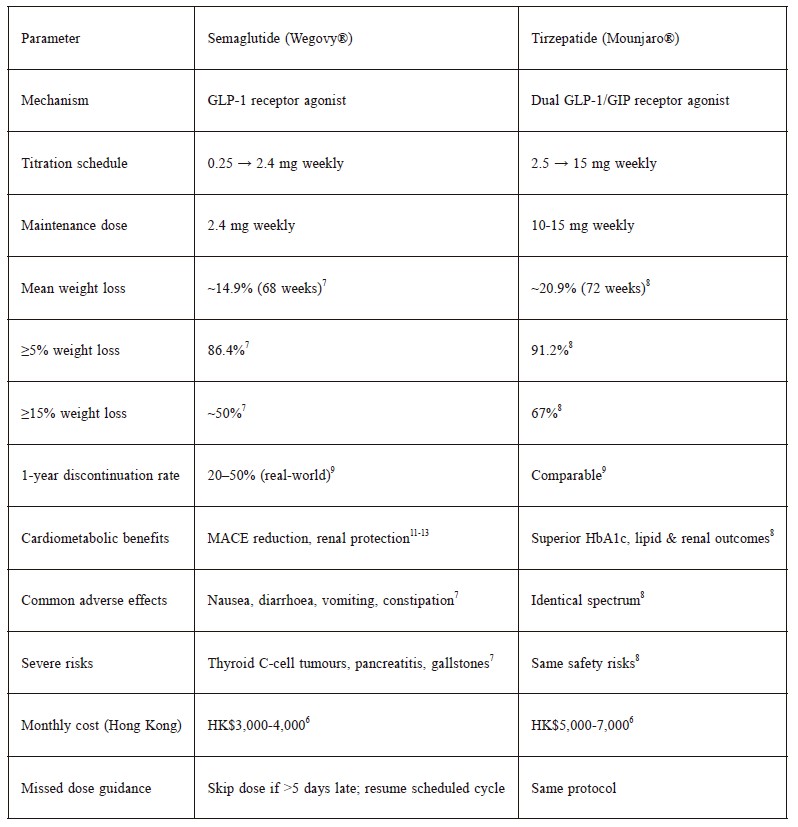
HK Pract 2026;48:68-76 AbstractThis review synthesises current evidence on GLP-1 and dual GLP-1/GIP receptor agonists for obesity management in primary care. Semaglutide achieves approximately 14.9% weight loss at 68 weeks, while tirzepatide delivers a greater 20.9% reduction at 72 weeks, though at higher monthly cost in Hong Kong. Asian populations require lower BMI thresholds for intervention (≥27.5 kg/m², or ≥25 kg/m² with comorbidities), reflecting elevated cardiometabolic risk at lower body mass compared with Western cohorts. Sustained outcomes depend on multidisciplinary care, including pre-treatment screening for contraindications, gradual dose titration to mitigate gastrointestinal adverse events, adherence to a protein-focused diet with resistance training to prevent sarcopenia, and ongoing psychological support. Discontinuation typically results in regaining two-thirds of lost weight within 12 months, underscoring obesity as a chronic condition requiring continuous management. These injectable therapies provide a reversible, minimally invasive alternative to bariatric surgery, enabling general practitioners to coordinate integrated pharmacological, lifestyle, and mental health interventions that improve long-term outcomes for adults with overweight and obesity. 摘要本文整合現有研究證據,探討GLP-1受體促效劑與GLP-1/GIP雙重受體促效劑用於基層醫療肥胖症治療之臨床應用。司美格魯肽持續治療68週可達約14.9%的體重降幅;替爾泊肽治療72週的減重效果更優,達20.9%,惟於香港每月藥費更高。亞洲族群啟動藥物介入的身體質量指數門檻更低(≥27.5公斤/平方公尺;若合併共病則≥25公斤/平方公尺),反映相較西方族群,亞洲人在較低體重下即存在更高的心臟代謝疾病風險。長期維持減重成效需跨領域整合照護,包含治療前篩檢禁忌症、逐步調升藥物劑量以減緩腸胃道副作用、配合高蛋白飲食與阻力訓練避免肌肉流失,以及持續心理支持。多數患者停藥後12個月內會回復三分之二已減去的體重,證實肥胖屬慢性疾病,需長期持續管理。此類針劑藥物相較減重手術具可逆性、低侵入性的替代方案,讓基層醫師得以整合藥物、生活型態與心理衛生介入,改善過重及肥胖成人的長期預後。 IntroductionThe global obesity epidemic has fundamentally reshaped daily primary care practice, placing substantial clinical responsibility on general practitioners to manage obesity and its wide spectrum of associated complications. In Hong Kong, roughly 30% of adults are overweight and 10% meet formal obesity diagnostic criteria, with rising prevalence recorded across child and adolescent age groups.1,2 Beyond impacts on body image and self-esteem, obesity acts as a major modifiable risk factor for type 2 diabetes mellitus (T2DM), cardiovascular disease, stroke and multiple malignancies, imposing significant financial and service pressure on public healthcare systems.3 GLP-1 receptor agonists and the newer dual GLP-1/GIP receptor agonists mark a fundamental paradigm shift in obesity pharmacotherapy. Originally developed to improve glycaemic control in T2DM, these injectable agents deliver robust weight-reducing effects by targeting the core hormonal and neurological pathways driving excess appetite and fat storage, rather than relying solely on patient willpower.4,5 This review consolidates up-to-date clinical evidence covering drug mechanisms, comparative efficacy, safety profiles and practical implementation within Hong Kong family medicine settings. Specific attention is paid to population-specific Asian BMI treatment thresholds, pre-treatment baseline investigations, side effect mitigation strategies, nutritional guidance to prevent sarcopenia, cost barriers and the changing role of bariatric surgery in patients receiving GLP-1-based therapy. Mechanisms of ActionGLP-1 receptor agonists mimic endogenous GLP-1, an incretin hormone with broad metabolic regulatory functions. They stimulate glucose-dependent insulin secretion to stabilise blood glucose, suppress central appetite signalling via melanocortin pathways, delay gastric emptying and prolong post-meal satiety.4,5 Currently in Hong Kong, semaglutide (Wegovy®) and liraglutide (Saxenda®) are the only agents approved specifically for the clinical indication of weight management alone.6 Once-weekly semaglutide 2.4 mg is the most widely prescribed option due to its superior weight loss efficacy and convenient single-weekly subcutaneous administration.7 Ozempic® (semaglutide) is approved in Hong Kong for glycaemic control in T2DM rather than for weight management alone. Accordingly, it is not included in this review, which focuses on agents specifically indicated for obesity pharmacotherapy.6 Tirzepatide (Mounjaro®), the dual GLP-1/GIP receptor agonist, combines GLP-1 stimulation with agonism at GIP receptors. GIP enhances pancreatic insulin release and peripheral insulin sensitivity, and works synergistically with GLP-1 to regulate adipocyte lipid turnover and central appetite control. This dual mechanism explains the larger magnitude of weight loss and superior glycated haemoglobin (HbA1c) lowering observed in phase III clinical trials.8 Both semaglutide and tirzepatide are delivered via weekly subcutaneous injection, with mandatory slow dose escalation to reduce the frequency and severity of gastrointestinal adverse reactions.9 Maximum therapeutic effects are generally achieved 4-6 weeks after reaching the maintenance dose, though individual patient responses vary according to baseline diet, physical activity levels and pre-existing metabolic function.9 The pharmacodynamics of these agents reveal important differences. Semaglutide, with its structural modification conferring resistance to dipeptidyl peptidase-4 degradation, achieves a half-life of approximately 7 days, enabling once-weekly dosing.7 Tirzepatide, engineered as a synthetic peptide incorporating both GLP-1 and GIP agonist activity, exhibits similar pharmacokinetic properties suitable for weekly administration.8 The synergistic actions of dual agonism appear to produce additive effects on weight reduction beyond those achievable with GLP-1 monotherapy, likely through complementary mechanisms involving hypothalamic appetite regulation, adipose tissue metabolism and gastrointestinal motility.8 Comparative EfficacyIn the pivotal STEP 1 trial - a randomised, double-blind, placebo-controlled phase III trial involving 1,961 adults with overweight or obesity – once-weekly 2.4mg semaglutide plus standard lifestyle intervention yielded a 14.9% mean weight loss at 68 weeks; 86.4% of participants achieved ≥5% weight loss, and nearly half attained ≥15% body weight reduction.7 The SURMOUNT 1 trial - a randomised, double-blind, placebo-controlled phase III trial involving 2,539 adults with obesity - reported that weekly 10-15 mg tirzepatide resulted in a 20.9% mean weight loss at 72 weeks, with 91.2% of participants losing ≥5% body weight and 67% achieving ≥15% weight loss.8 Head-to-head network meta-analyses consistently demonstrate superior weight and HbA1c reduction with tirzepatide compared to semaglutide.10 Both agents offer meaningful cardiovascular and renal protection. Semaglutide reduced major adverse cardiovascular events (MACE) in the SELECT trial (hazard ratio = 0.80) and exerted renoprotective effects in the SUSTAIN 6 and FLOW trials.11-13 Post hoc analyses of the SURPASS CVOT programme confirm tirzepatide provides superior lipid correction and comparable renal safety benefits.8,9 International primary care real-world data show annual treatment discontinuation rates of 20-50%, driven primarily by high monthly medication costs, persistent gastrointestinal intolerance, and limited insurance coverage for obesity pharmacotherapy.9 In Hong Kong’s healthcare system, these access barriers are particularly pronounced given the absence of public reimbursement for anti-obesity pharmacotherapy.6,9 The efficacy data translate into meaningful clinical outcomes. For a patient with a baseline weight of 100kg, semaglutide therapy would be expected to produce approximately 15kg of weight loss, while tirzepatide would yield approximately 21kg of reduction.7,8 Such weight loss is linked to improvements in blood pressure, lipid profiles, glycaemic control and quality of life measures.8 The percentage of patients achieving clinically meaningful weight loss thresholds (≥5%, ≥10%, ≥15%) is consistently higher with tirzepatide across all categories.8,10 Table 1: Comparison of GLP-1-based Weight Management Therapies
Transforming Bariatric Surgery Pathways — Asian Clinical ContextBariatric surgical interventions including Roux-en-Y gastric bypass and sleeve gastrectomy have long been regarded as the most potent treatment for severe obesity.14 Western clinical guidelines set surgical eligibility at BMI ≥40 kg/m², or ≥35 kg/m² with one or more weight-related comorbidities.15 For Asian populations including Hong Kong residents, intervention thresholds are substantially lower: BMI ≥37.5 kg/m² without comorbidities, or ≥32.5 kg/m² with concurrent T2DM, hypertension, dyslipidaemia or obstructive sleep apnoea.14 This adjustment reflects consistent epidemiological evidence that Asian individuals carry a higher proportion of visceral fat and develop metabolic complications at significantly lower BMI values than Caucasian patient groups.14,16 All bariatric surgical procedures are irreversible and carry well-documented long-term adverse risks: chronic nutritional deficiencies affecting 30–50% of operated patients, progressive bone mineral loss in 15-30% of cases, gastrointestinal dumping syndrome or gallstone formation in 20-40% of recipients, and elevated rates of anxiety, depression and body image distress, particularly following malabsorptive surgical techniques.14,17 GLP-1 and dual GLP-1/GIP agonist pharmacotherapy provides a fully reversible, minimally invasive alternative capable of delivering weight loss magnitudes approaching surgical outcomes in carefully selected patients, even at the lower Asian BMI cut-offs.14,18 This creates a clear clinical pathway to delay, modify or entirely avoid bariatric surgery for appropriate candidates.18 General practitioners should discuss both surgical and pharmaceutical weight management options with patients during pre-treatment counselling, framing GLP-1 therapy either as a temporary bridge to surgery or a long-term standalone intervention that preserves native gastrointestinal anatomy.18 Patients who fail to achieve adequate weight loss with medication or experience rapid weight regain after treatment cessation remain eligible for surgical referral assessed against local Asian BMI criteria.14 The integration of pharmacotherapy into obesity treatment algorithms represents a paradigm shift. Previously, patients with class II or III obesity had limited options beyond lifestyle modification and surgery. The availability of highly effective medical therapies now provides a middle ground, enabling weight reduction that may reduce perioperative risk for those proceeding to surgery, or potentially render surgery unnecessary for some patients.18 Safety and TolerabilityGastrointestinal adverse events affect 40-70% of treated patients, with nausea, vomiting, diarrhoea and constipation the most commonly reported symptoms.9 These side effects are typically mild to moderate in severity, peak during the dose titration phase and gradually resolve within several weeks of reaching a stable maintenance dose.9 In real-world clinical practice, approximately 20-30% of patients discontinue therapy due to persistent gastrointestinal intolerance, with discontinuation rate highest during the titration phase.9,19 Severe adverse outcomes are rare but require consistent clinical vigilance throughout treatment:
The US Food and Drug Administration completed a comprehensive review of spontaneous reports of suicidal ideation and found no causal association with these agents, yet routine monitoring for new or worsening depressive symptoms remains good clinical practice for all patients receiving long-term obesity pharmacotherapy.9 Regarding maximum treatment duration and long-term safety, clinical trials have followed participants for up to 2-3 years of continuous therapy, with ongoing extension studies tracking outcomes beyond this period.7,8 Current evidence suggests sustained efficacy and acceptable safety profiles for up to 104 weeks of treatment, the longest duration reported in published phase III trials to date.8,9 Longer-term safety data beyond 3 years are still being accumulated through open-label extension studies and post-marketing surveillance. Table 2: Practical Management of Common GI Adverse Effects
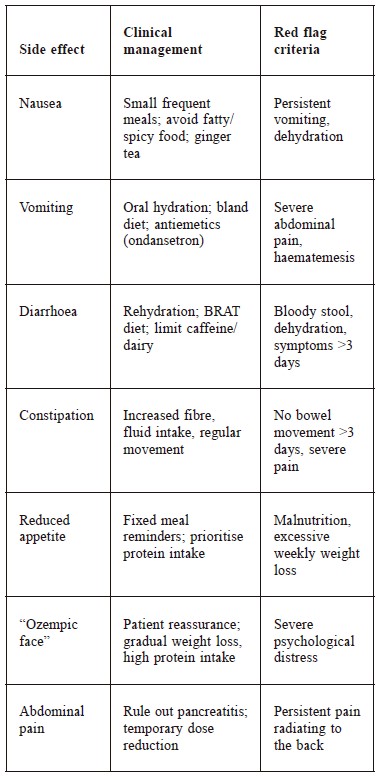
Adapted from real-world evidence and clinical practice guidelines.9,20 Contraindications and Drug InteractionsAbsolute Contraindications
Clinically Significant Drug Interactions
Baseline Pre-Treatment InvestigationsComprehensive pre-therapy laboratory and clinical assessment is mandatory to mitigate safety risks and establish baseline reference values for ongoing therapeutic monitoring, summarised in Table 3 below.9,20 Nutritional Support and Sarcopenia PreventionRapid weight loss induced by GLP-1 agonists typically includes 15-40% loss of lean muscle mass alongside fat reduction9, a process that drives sarcopenia, lowers resting metabolic rate, impairs physical function and significantly hinders long-term weight maintenance.21,22 Adequate daily protein intake and structured resistance training are therefore non-negotiable core components of all treatment plans.21,22 Table 3: Baseline Investigations Prior to GLP‑1 Therapy Initiation
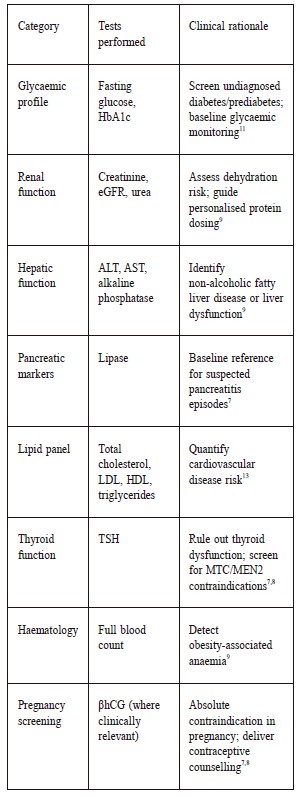
Referral to a registered dietitian is indicated for patients with eGFR <30 mL/min (requiring protein restriction), confirmed food allergies or restrictive eating patterns, clinical eating disorders, sustained excessive weekly weight loss (>1.5kg), poor treatment response despite full adherence to lifestyle guidance, or persistent patient confusion regarding dietary protocols.9 Psychosocial and Cost ConsiderationsObesity is closely intertwined with significant psychological morbidity, including internalised weight stigma, low self-esteem and avoidance of routine healthcare appointments due to shame.22 Binge eating disorder affects 20-30% of patients seeking formal weight loss treatment, while depression, generalised anxiety and severe body image disturbance are highly prevalent.7,22 General practitioners must explore these psychosocial domains during pre-treatment counselling to improve medication adherence, prepare patients for long-term lifestyle modification and set realistic therapeutic weight loss expectations.22 Treatment cost represents the single largest access barrier within Hong Kong, where private and public insurance coverage for obesity pharmacotherapy remains extremely limited.6 Tirzepatide carries substantially higher monthly expenditure than semaglutide (HK$5,000-7,000 versus HK$3,000-4,000).6 Clinicians must discuss affordability and long-term financial sustainability before initiating therapy; a 3-6 month therapeutic trial is recommended to assess individual weight loss response before patients commit to indefinite long-term treatment.9 The World Health Organisation has issued conditional clinical recommendations highlighting the urgent need for equitable population access and strengthened health system capacity to deliver GLP-1-based obesity care across all income groups.23 The psychological impact of weight loss should not be underestimated. While many patients experience improvements in mood and self-esteem as weight decreases, others may struggle with body image changes, including the phenomenon of facial volume loss colloquially termed “Ozempic face”.9 Clinicians should address these concerns proactively, providing reassurance and realistic expectations about the trajectory and pattern of weight loss. Stepwise Implementation in General Practice
Key messages
Discontinuation and Transition PlanningUniversal weight regain is observed after GLP-1 therapy cessation across all clinical cohorts.7,8 The active treatment period represents a critical therapeutic window to embed sustainable healthy lifestyle behaviours that persist after medication withdrawal.9 For patients discontinuing therapy due to unaffordable costs, persistent gastrointestinal intolerance or planned pregnancy, a structured transition plan must be implemented, incorporating gradual dose tapering (to reduce rebound hyperphagia), intensive individualised dietary counselling with structured meal planning, increased frequency of physical activity review and monthly initial follow-up appointments to identify early weight regain.9 Where substantial rebound weight gain occurs, clinicians re-evaluate bariatric surgery eligibility using Asian BMI thresholds or restart pharmacotherapy if financial access becomes feasible for the patient.14 The phenomenon of weight regain highlights the importance of setting appropriate expectations from the outset. Patients should understand that GLP-1 therapy is not a cure but rather a powerful tool for weight management that requires ongoing commitment to lifestyle changes.9 The treatment period should be viewed as an opportunity to establish habits that can be maintained even after discontinuation of medication. Future DirectionsOral semaglutide (Rybelsus®) formulations are currently undergoing large-scale clinical evaluation for weight management indications, with potential to improve patient treatment accessibility by removing the requirement for subcutaneous injection.25 Novel dual and triple receptor agonists including retatrutide (GLP-1/GIP/glucagon receptor agonist) are in late-stage clinical trials and deliver even greater magnitudes of weight loss than tirzepatide.8,25 Asia-specific cost-effectiveness analyses are urgently required to generate local health economic data and inform public health policy regarding reimbursement and population access to these high-value anti-obesity medicines.9 General practitioners must maintain ongoing awareness of emerging therapeutic agents as the landscape of obesity pharmacotherapy continues to evolve rapidly.25 The emergence of combination therapies and multi-receptor agonists represents the next frontier in obesity pharmacotherapy. Agents targeting additional pathways involved in energy homeostasis may produce even greater weight losses with improved tolerability profiles. Long-term safety data will be crucial as these newer agents enter clinical practice, particularly regarding cardiovascular outcomes and potential rare adverse events. ConclusionsGLP-1 receptor agonists and dual GLP-1/GIP agonists have transformed the delivery of obesity care within Hong Kong general practice. Tirzepatide delivers superior weight reduction outcomes but carries higher monthly treatment costs, while both drug classes offer meaningful long-term cardiovascular and renal protective benefits for patients with overweight and obesity.7,8,11-13 Successful clinical deployment demands comprehensive pre-treatment baseline screening, consistent patient education on the protein-first dietary framework and mandatory resistance exercise, ongoing psychological support and a formal chronic disease management model rather than short-term therapeutic intervention.9 Lower BMI thresholds tailored to Asian populations (≥27.5 kg/m² or ≥25 kg/m² with comorbidities) enables timely clinical intervention aligned with local population metabolic risk profiles.14,16 General practitioners are uniquely positioned to coordinate integrated multi-modal obesity care - combining pharmacotherapy, evidence-based lifestyle modification and targeted surgical referral where clinically appropriate - to optimise long-term weight and cardiometabolic outcomes for adults living with obesity.18 References
Sio-pan Chan,
MBBS (HK), DFM (HKCU), FHKFP, FHKAM (Family Medicine)
Alfred KY Tang,
MBBS (HK), MFM (Monash)
Dr. Sio-pan Chan, SureCare Medical Centre (CWB), Room 1116-
7, 11/F, East Point Centre, 555 Hennessy Road, Causeway Bay,
Hong Kong SAR.
|
|