Research & Publications > The Hong Kong Practitioner > Clinical Quiz

Clinical Quiz (Please login 'Member Area' for online submission of latest issue)
Clinical Quiz December 2025
An elderly old age home resident with generalised pruritic rashes for over one year
Audrey YY Yau, Adrian KC Cheng
|
Readers are invited to participate in the Clinical Quiz*. Simply answer the question, fill in the reply slip and return it to the College by 19 February 2026. Each reader is allowed to submit one entry only.
*Note: There would be no prize award for this issue while sponsorship for Clinical Quiz has been ended in September 2020 issue. The answer of the Clinical Quiz for this issue will be announced in the next issue. Thank you for your support.
|
Clinical history:
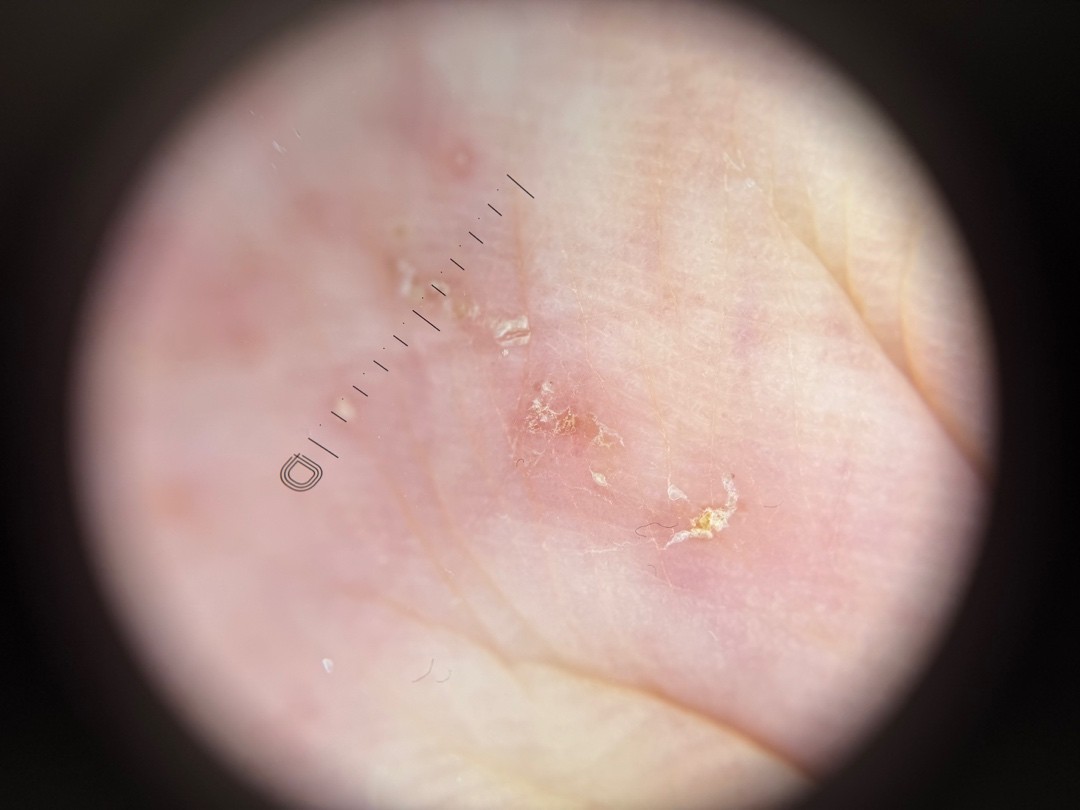
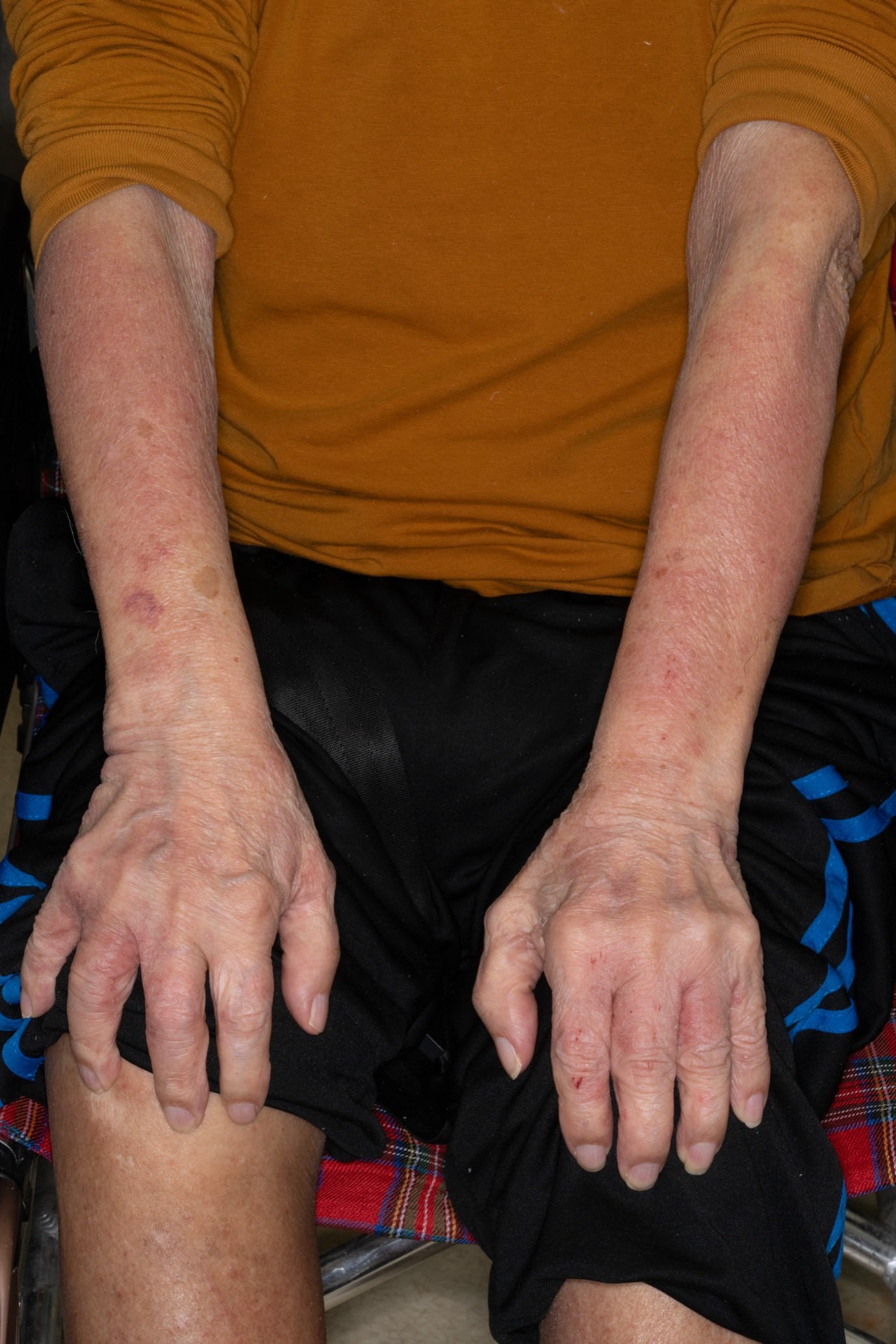
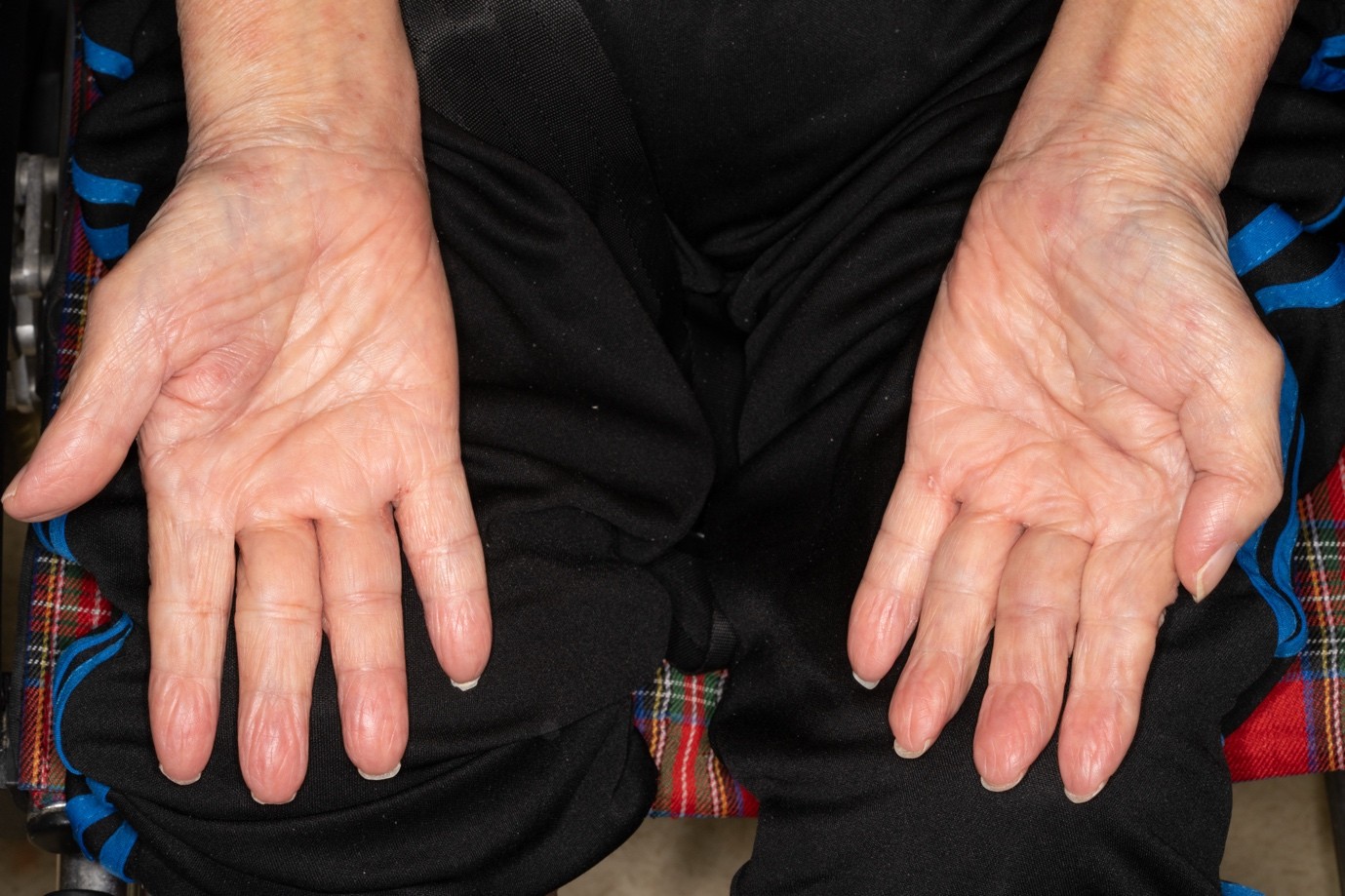
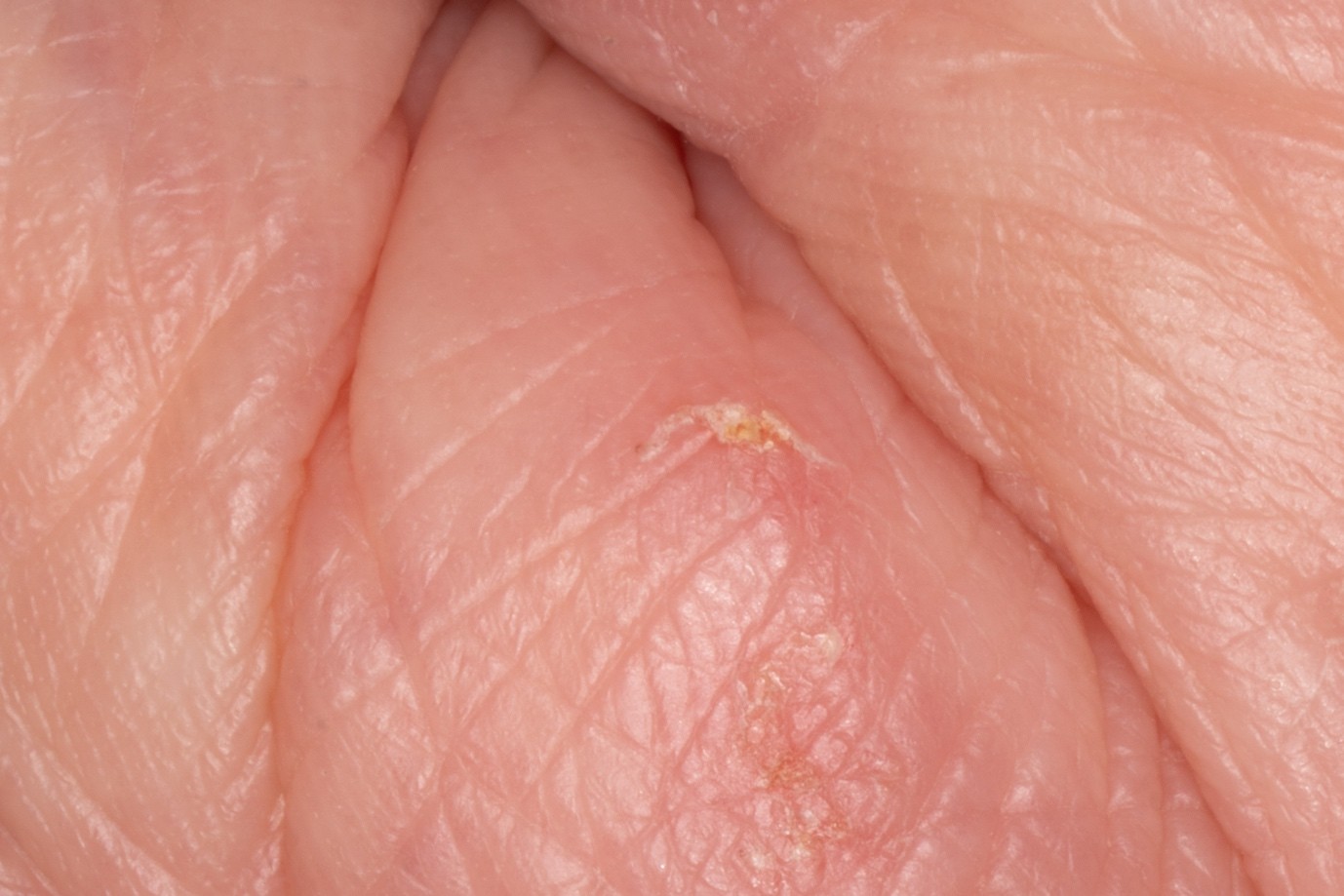
An 86-year-old man, a resident of an old age home, presented with generalised pruritic rash over his trunk and bilateral upper and lower limbs for over one year. His previous treatments include 2 courses of topical permethrin 5% lotion and intermittent topical corticosteroids, with minimal sustained improvement. On examination, the forearms and dorsum of hands showed ill-defined erythematous patches with excoriations. A characteristic sign was noted over his right thenar eminence, which became more conspicuous on dermoscopic examination.
What is the diagnosis?
| A. | Scabies |
| B. | Allergic contact dermatitis |
| C. | Asteatotic eczema |
| D. | Dermatomyositis |
Answer:
A. Scabies
Scabies commonly presents in elderly institutionalised patients as a chronic, generalised pruritic papular eruption with excoriations. Ill-defined erythematous patches involving the trunk and extremities may be present. Involvement of the hands, particularly the thenar eminence and interdigital spaces is a useful clinical clue. Dermoscopy may reveal the typical “delta-wing jet” sign (a triangular dark structure at the end of a whitish burrow representing the mite), which strongly supports the diagnosis.
Scabies is caused by infestation with Sarcoptes scabiei. The diagnosis is frequently delayed, leading to persistent symptoms in older adults. The condition may be misdiagnosed as eczema, particularly when lesions are appear eczematous and temporarily improve with topical corticosteroids. The eczematous eruption represents a hypersensitivity reaction to mite antigens rather than the direct infestation of the mite.
Classic scabies is treated by permethrin lotion 5% to entire body, leave on for 8-12 hours and repeat after seven days. Permethrin kills mites but not all eggs. The second application eliminates the newly hatched mites before they reach reproductive maturity.
Crusted scabies should be considered in immunocompromised patients and frail older adults. Thick hypertrophic crusts, predominantly over hands and feet are characteristic, represents an extremely high mite burden. Crusted scabies should be treated by a combination of oral ivermectin and repeated applications of topical permethrin. Topical keratolytic such as urea cream 20-40% is commonly used to reduce hyperkeratosis and enhance penetration of scabicides.
Simultaneous treatment of close contacts, and appropriate environmental control measures are essential to prevent reinfestation.
The slide and the question were prepared by:
Miss. Audrey YY Yau
Year 5 Medical Student,
The University of Hong Kong
Dr. Adrian KC Cheng, MBBS(HK), MRCP(UK), MSc GEOR (CUHK), FHKCP, FHKAM (Medicine)
Specialist in Dermatology & Venereology;
Associate Consultant,
Division of Dermatology, Department of Medicine, Queen Mary Hospital, Hong Kong SAR
Back