Research & Publications > The Hong Kong Practitioner > Clinical Quiz

Clinical Quiz (Please login 'Member Area' for online submission of latest issue)
Clinical Quiz March 2026
An elderly woman presented with a hyperkeratotic nodule over the vertex
of scalp for few months
Adrian KC Cheng
|
Readers are invited to participate in the Clinical Quiz*. Simply answer the question, fill in the reply slip and return it to the College by 19 May 2026. Each reader is allowed to submit one entry only.
*Note: There would be no prize award for this issue while sponsorship for Clinical Quiz has been ended in September 2020 issue. The answer of the Clinical Quiz for this issue will be announced in the next issue. Thank you for your support.
|
Clinical history:
An 87-year-old woman presented with an enlarging mass over the vertex of her scalp for a few months. Examination showed a 4x4cm hyperkeratotic nodule. A fleshy friable base with contact bleeding was revealed after crust removal.
What is the diagnosis?
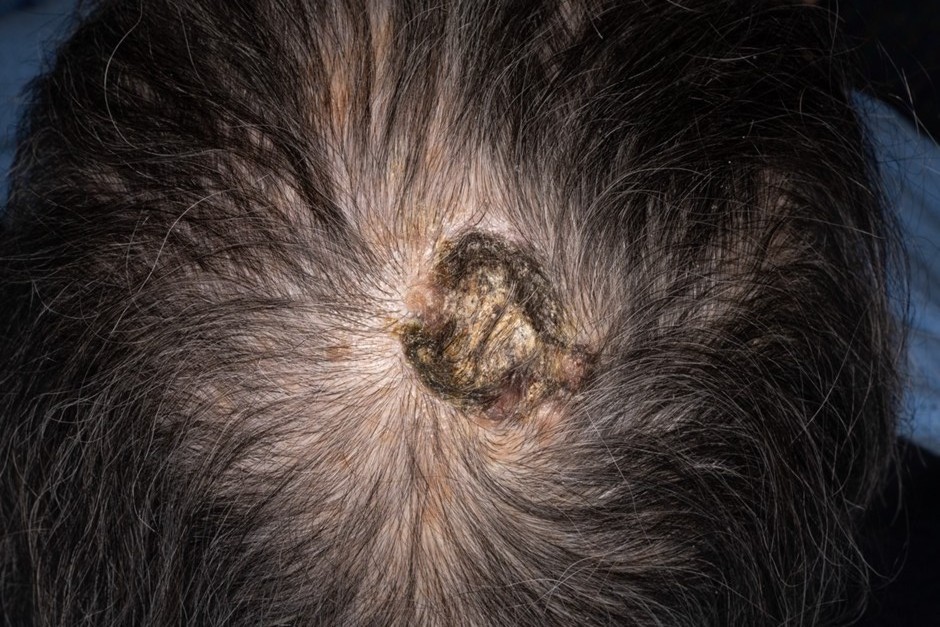
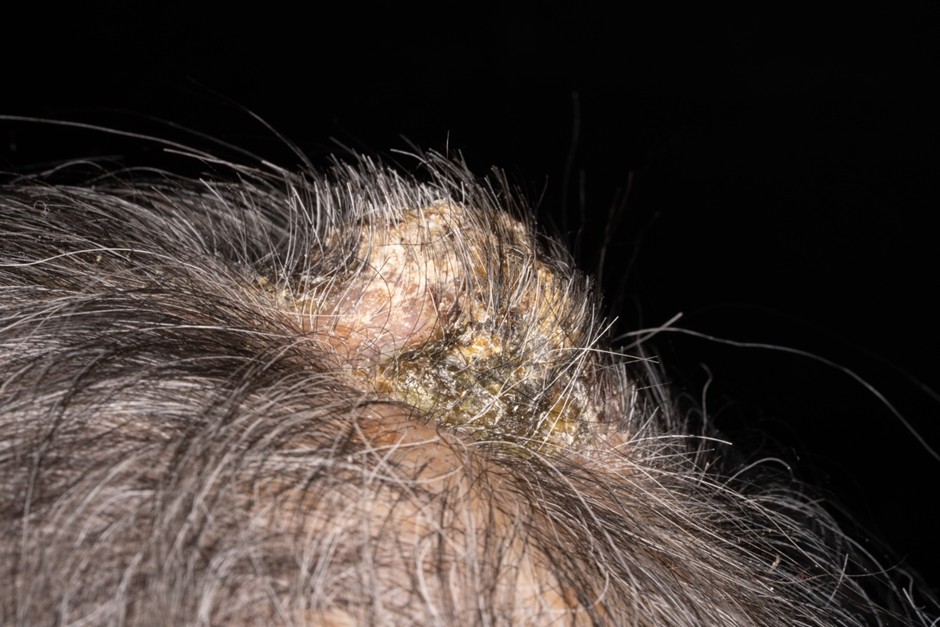
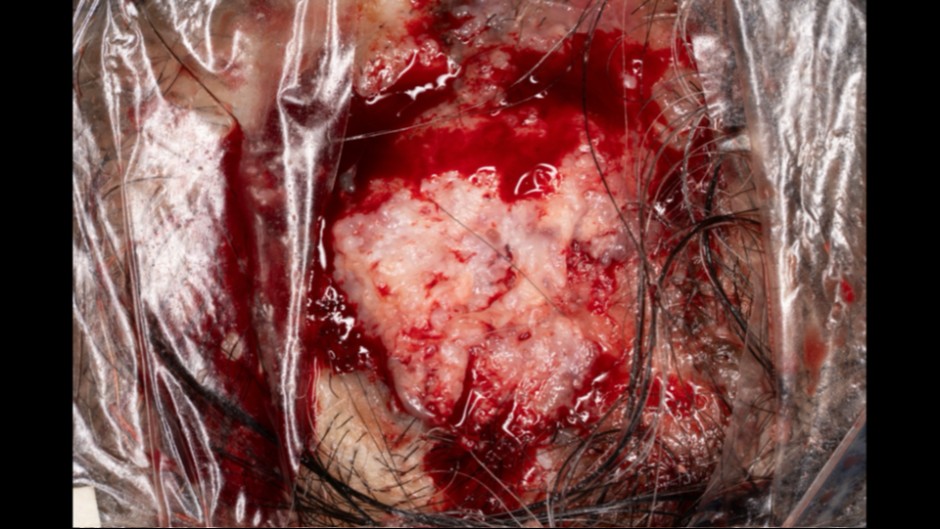
| A. | Kerion |
| B. | Squamous cell carcinoma |
| C. | Erosive pustular dermatosis of scalp |
| D. | Viral wart |
Answer:
B. Squamous cell carcinoma
The diagnosis is B. Squamous cell carcinoma (SCC).
This elderly woman presented with a rapidly enlarging hyperkeratotic scalp nodule with a friable
bleeding base after crust removal, which is highly suspicious for cutaneous SCC. The scalp, particularly the vertex, is a common site for SCC in elderly patients due to chronic cumulative ultraviolet exposure.
Cutaneous squamous cell carcinoma is the second most common non-melanoma skin cancer and typically
occurs in elderly individuals on chronically sun-exposed areas such as the scalp, face, ears, and dorsal hands. Clinically, SCC may present as a hyperkeratotic papule, plaque, or nodule with crusting, ulceration, friability, and contact bleeding. Rapid enlargement and tenderness may also occur.
Histopathological examination is required for definitive diagnosis. Management depends on tumour size, depth, and risk factors, and may include surgical excision, Mohs micrographic surgery, radiotherapy,
or other modalities. Early diagnosis is important because SCC carries a risk of local destruction and
metastasis.
The slide and the question was prepared by:
Dr. Adrian KC Cheng, MBBS(HK), MRCP(UK), MSc GEOR (CUHK), FHKCP, FHKAM (Medicine)
Specialist in Dermatology & Venereology;
Associate Consultant,
Division of Dermatology, Department of Medicine, Queen Mary Hospital, Hong Kong SAR
Back